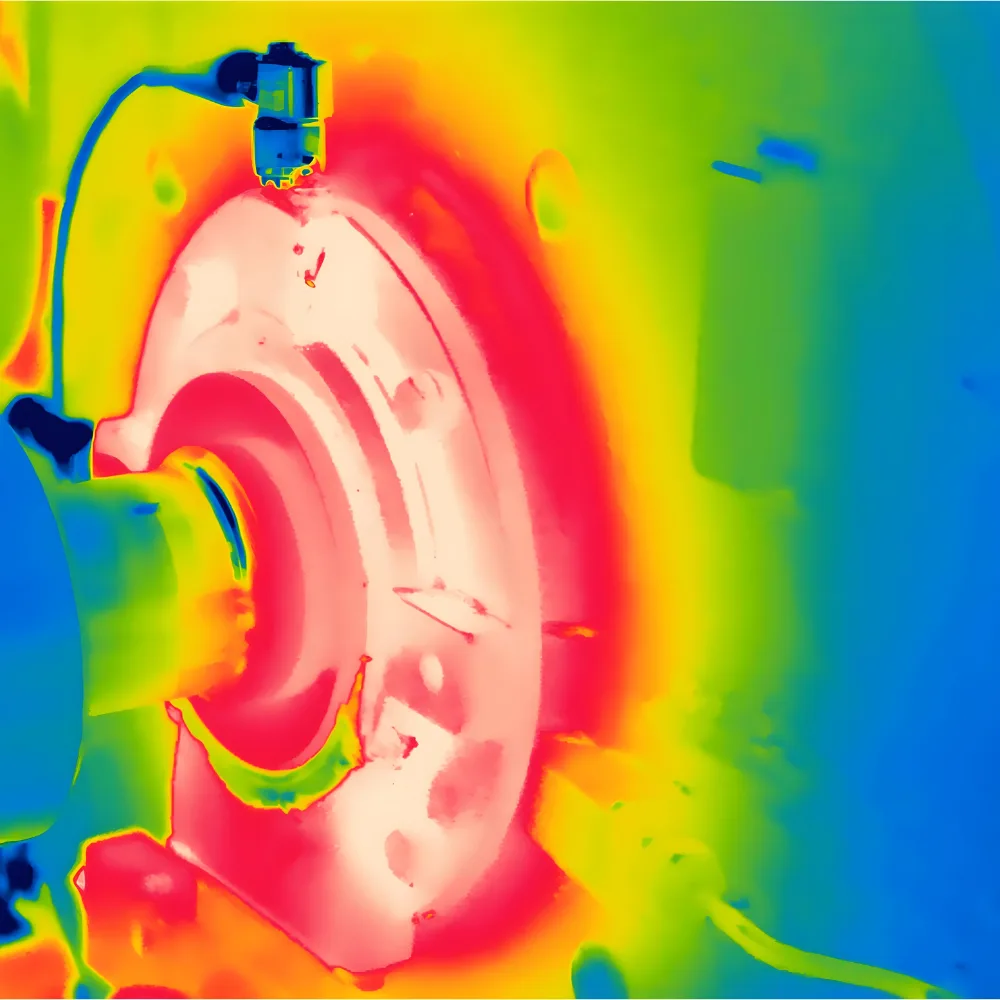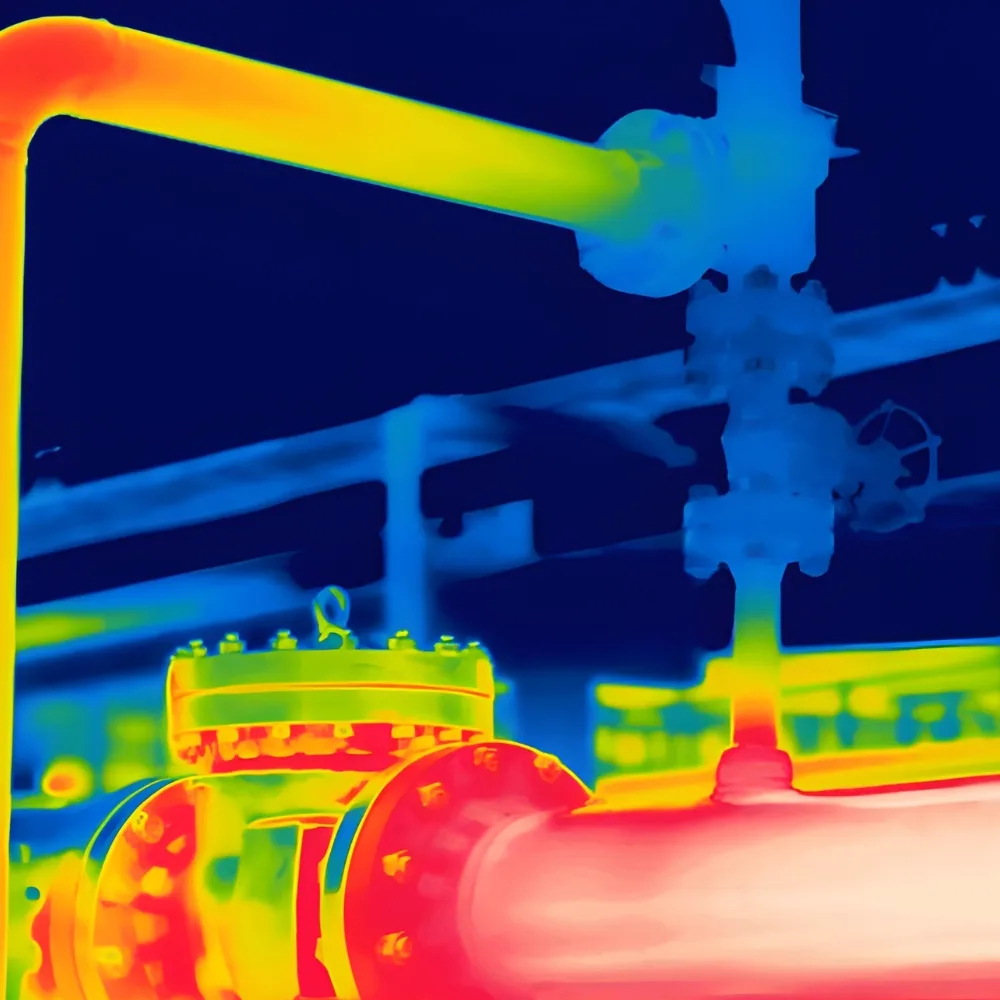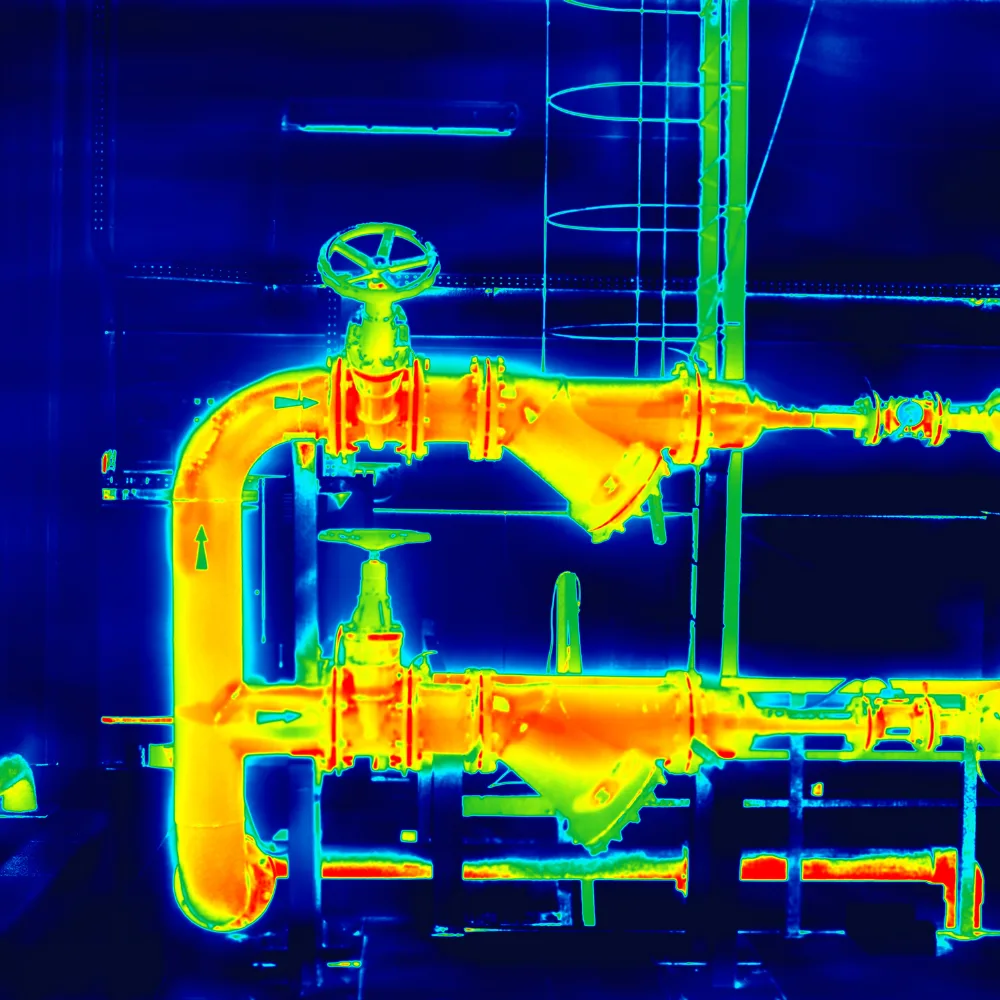
A main switchboard feeding a strategic production line starts showing signs of distress. Overheating is suspected, so a thermographic inspection is ordered. How that inspection is carried out draws a sharp line between a disaster narrowly avoided and a textbook predictive intervention.
Let us compare two opposite approaches on the very same plant.
Scenario A: the improvised inspection
The technician walks up to the switchboard holding nothing but the camera. He is in a hurry, treats the inspection as routine and thinks: "it is just a quick shot, no need to waste time on paperwork".
- Permits ignored: no Work Permit is issued, no Field Level Risk Assessment (FLRA) is carried out, and the plant safety manager is not even aware of the operation.
- Opening the panel: since thermography does not require shutting the machinery down, he opens the LV switchboard door while the plant is running under full load — without cordoning off the area, without warning signage, wearing ordinary polyester workwear and no face protection.
- The near miss: during the survey the camera gets too close to exposed live busbars. Accumulated dust, a dropped tool or one sudden movement could trigger an arc flash. Even at low voltage, an arc blast at that distance hits the operator with a pressure wave and temperatures that instantly exceed 5,000 °C — the surface of the Sun — with even higher peaks at the ignition point. Without proper PPE, the outcome is catastrophic.
- The result: the inspection is completed "on luck", but the report carries no legal weight, does not comply with workplace safety law, and exposes the employer to serious liability in the event of an incident or an audit.
Scenario B: the procedure done properly
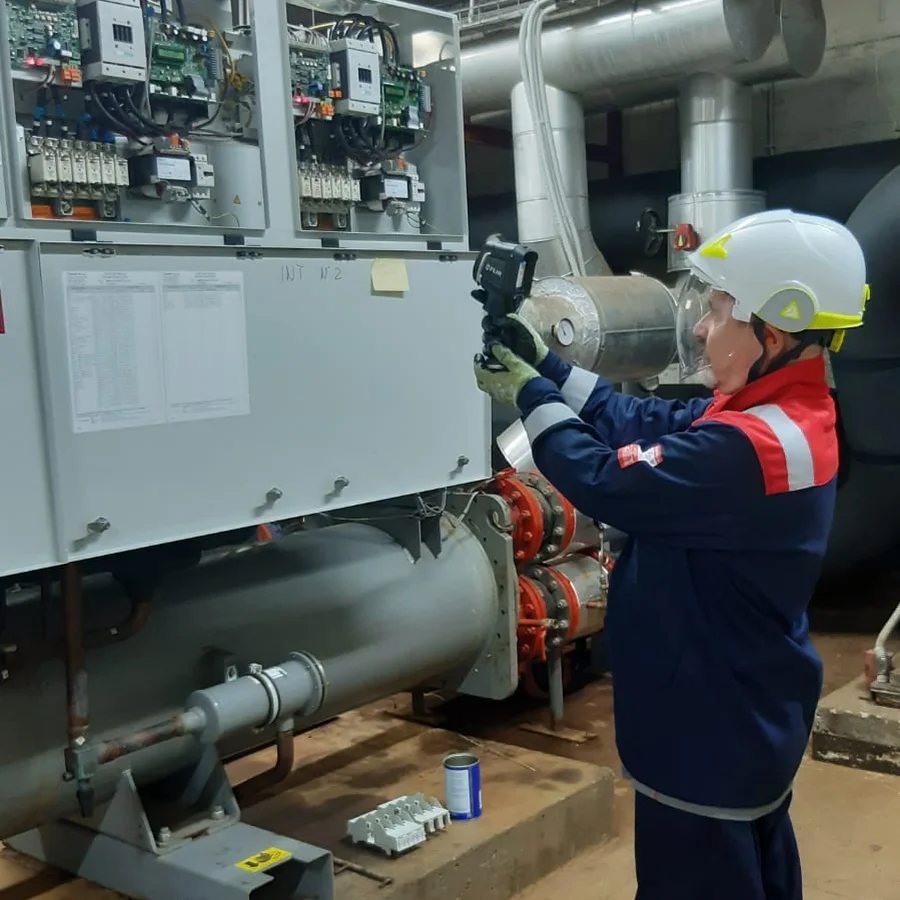
The same LV switchboard is inspected by a certified thermographic operator. This is where a genuine industrial safety culture comes into play.
Step 1 — Authorisation and permits
Before the camera is even switched on, the safety protocol is started:
- a Work Permit for live working or working in proximity is drawn up and signed, in accordance with CEI 11-27;
- the site supervisor is involved in assessing the risks specific to that area;
- an exclusion zone is set up around the switchboard with barriers and "Electrical work in progress" signage.
Step 2 — The technological armour (Category 2 PPE)
The panel door is opened only once the operator is wearing the correct protective equipment for electrical and thermal risk, rated for PPE Category 2 (minimum 8 cal/cm²):
- Arc flash clothing: jacket and trousers, or a coverall, in flame-resistant technical fabrics. Unlike ordinary workwear, which would melt onto the skin, these garments act as a thermal shield and dissipate the energy of the blast.
- Balaclava: an arc-rated hood protecting the neck, ears and nape from radiant heat.
- Face protection: a helmet fitted with a polycarbonate visor certified to mitigate the thermal blast and the UV/IR radiation of the arc.
- Hand protection: insulating dielectric gloves of the appropriate voltage class, worn with leather overgloves against mechanical risk.
- Footwear and instruments: safety shoes with a dielectric sole and a certified professional thermal camera.
Step 3 — Radiometric survey and analysis
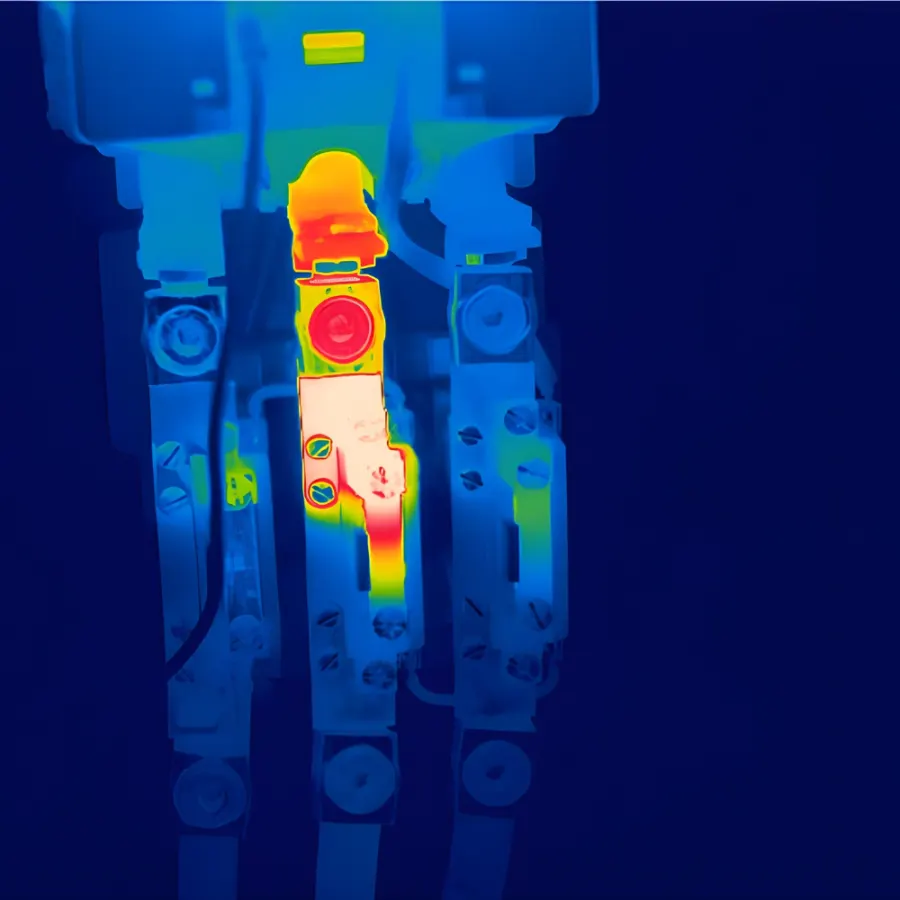
With the panel safely open and the operator protected, the survey begins. The instrument pinpoints a hotspot on a moulded case circuit breaker on phase R, running at 94 °C because of a defective tightening or an overload. The thermogram is captured while keeping the safety distances required by the technical standards.
Step 4 — The certified report
The inspection ends with no risk taken. The operator issues an official thermographic report signed as an ISO 9712 Level 2 technician. That document carries a triple value:
- it gives maintenance the exact coordinates to schedule the re-tightening or replacement at the next planned shutdown, protecting business continuity;
- it evidences that the employer has discharged its safety obligations;
- it becomes supporting documentation for insurance premium reductions granted to companies that invest in prevention.
Skipping procedures and PPE does not save time: it only raises the odds of a severe incident and a destructive plant outage.
Anatomy of a low voltage arc flash
"At low voltage the risk is minimal" is a myth. The short-circuit current available in a main LV switchboard can release devastating arc energy:
- Temperature: over 5,000 °C released instantly into the air.
- Chemical threat: the copper of the busbars vaporises and expands up to 40,000 times its solid volume as a toxic gas.
- Kinetic effect: a pressure wave able to hurl fragments and panel components at the operator.
Relying on specialists with standardised permits, approved PPE and international certifications is the only way to protect your workers and your plant. See how we work on our About us page, read more on arc flash protection, or explore our electrical systems services.